Books

Written words seem to speak to you; but ask them anything, and they go on telling you the same thing forever.

Socrates · in Plato's Phaedrus

The book behind the faculty

AI Tutors for Key Stage 3 is the field guide we wished every parent had: a plain-English account of how a Socratic AI tutor actually works — and how to tell a real one from a chatbot that just hands over the answer.

The foundation

The two books behind aitutors.me

Everything the tutors do rests on two parent-facing books. The first explains how a Socratic AI tutor actually works; the second maps the nine ways children really learn. Together they are the theory this whole site is built on.

Book one · AI Tutors series #1
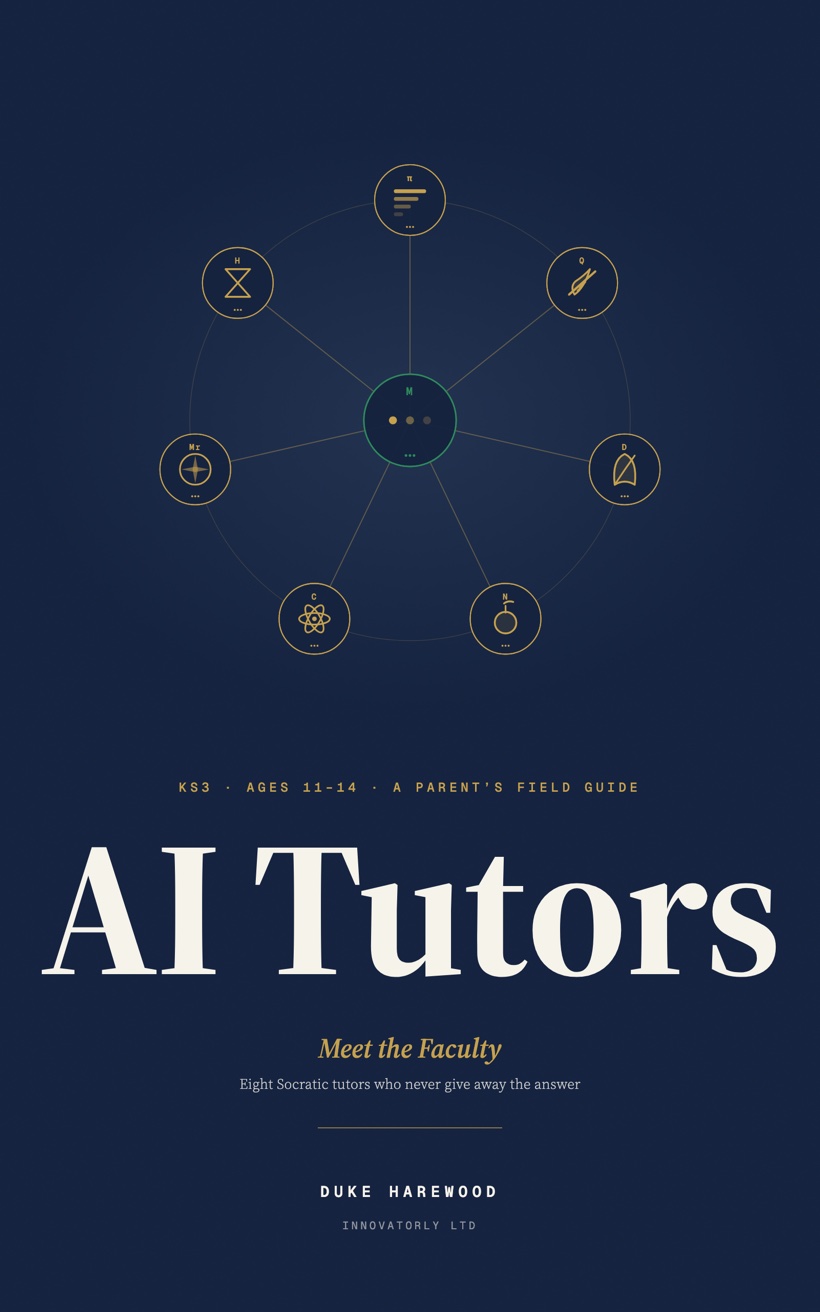
Cover of AI Tutors for Key Stage 3
English edition

AI Tutors for Key Stage 3

Meet Your AI Faculty for UK Secondary School

Duke Harewood · Innovatorly Ltd

A warm, plain-English guide for parents of 11–14-year-olds — and the curious students themselves. Meet eight AI tutors built on one unbreakable rule: never give the answer. No code, no hype; just how good AI tutoring actually works, and how to judge it.
Book two · AI Tutors series #2
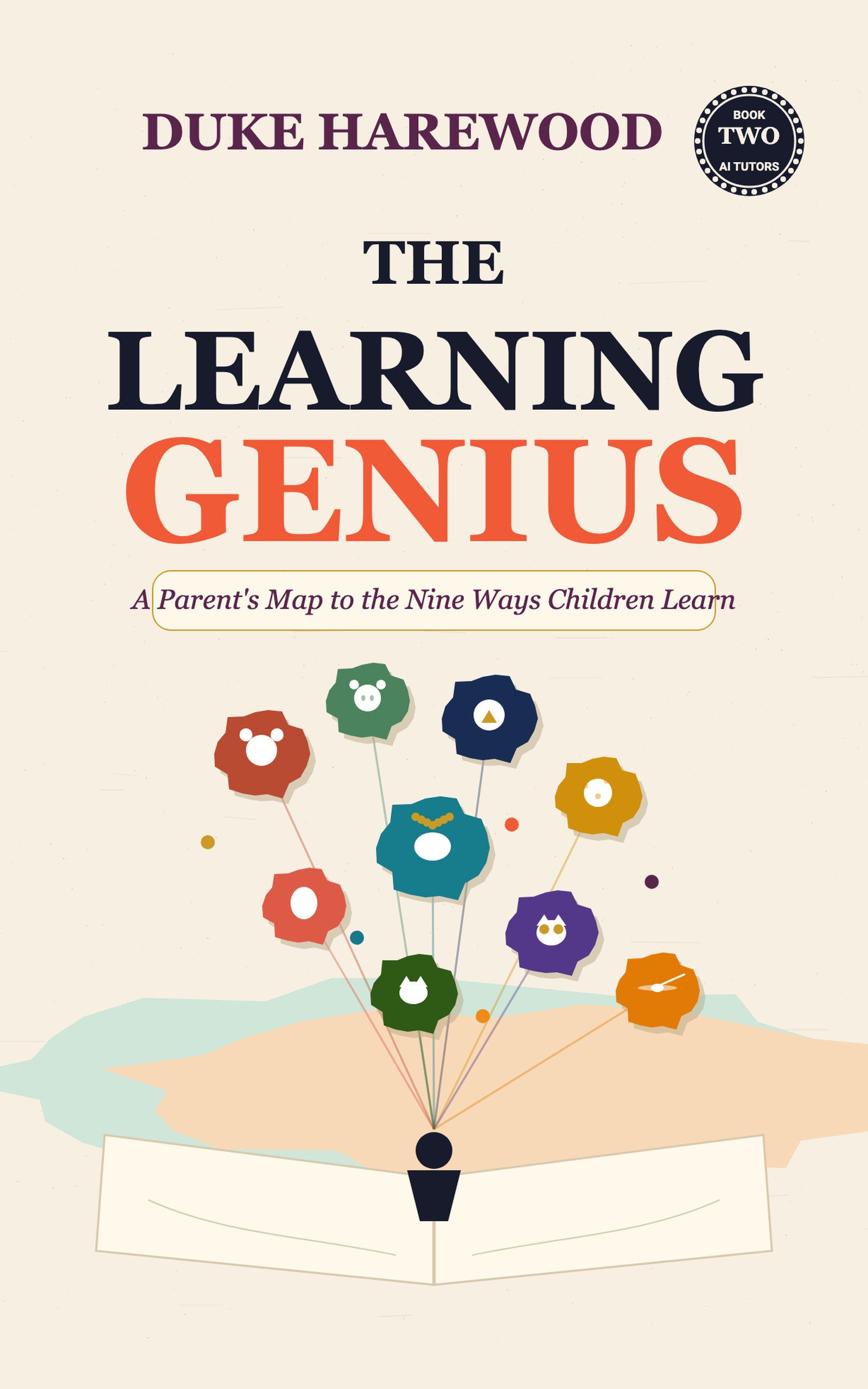
Cover of The Learning Genius
English edition

The Learning Genius

A Parent's Map to the Nine Ways Children Learn

Duke Harewood · Innovatorly Ltd

Every parent has watched a child approach schoolwork in a way that makes no obvious sense. Built around nine learning types — from Bold Bear to Sharp Eagle — this is a practical map to how your child meets work, what happens under GCSE-level pressure, why some encouragement lands badly, and what to say instead. Not a diagnosis; a parent's guide to motivation, stress, revision and support — and a bridge to adaptive AI tutoring that responds to the child in front of it.

What does a child starting Year 8 in 2026 need from their education? A child who is thirteen in 2026 will sit their A-levels around 2030 and graduate from university in roughly 2034 or 2035 — into a job market that will look nothing like the one their parents entered, and probably nothing like the one imagined by careers advisers working from data gathered five years ago.

— AI Tutors for Key Stage 3, Duke Harewood

What's inside

Six parts and an educators' appendix — read them in order, or raid them for what you need this week.

I

The Trend

Why one-to-one tutoring has always been the gold standard, what edtech missed, and the one principle everything hangs on.

II

Understanding the Machine

A plain-English, no-code AI-literacy primer: what an LLM, agent, MCP, skill and memory really are — enough to judge any AI tool.

III

The Faculty

A chapter on each of the eight tutors — Mentor, plus Pi, Quill, Darwin, Curie, Newton, Harari and Mercator.

IV

The Methods

The four-level hint ladder, the weekly energy system, the mastery loop, and where safeguarding draws the line.

V

The Parent Playbook

Is it safe, how to fit it into a full week, friend-versus-tutor, burnout, and whether it's worth it.

VI

Evidence & Curriculum

The research the method rests on, a full annotated session, a KS3 map, and an appendix for educators.

Articles, excerpts & guides

Free to read on the blog — announcements, a chapter-by-chapter guide and excerpts, for both editions.

Browse all book articles →

Explore more

Start reading

The English edition is available to buy on Amazon now. Excerpts, chapter guides and the thinking behind the book are free to read on the blog.

Buy on Amazon →Read the book articles →